

November 26, 1940 - Los Angeles
How memories can torture us, memories we thought we had long forgotten… They are more painful than the real events ever were, because our world of thought is so strongly influenced by our fantasy.
Hannelore Schaefer, unpublished diary
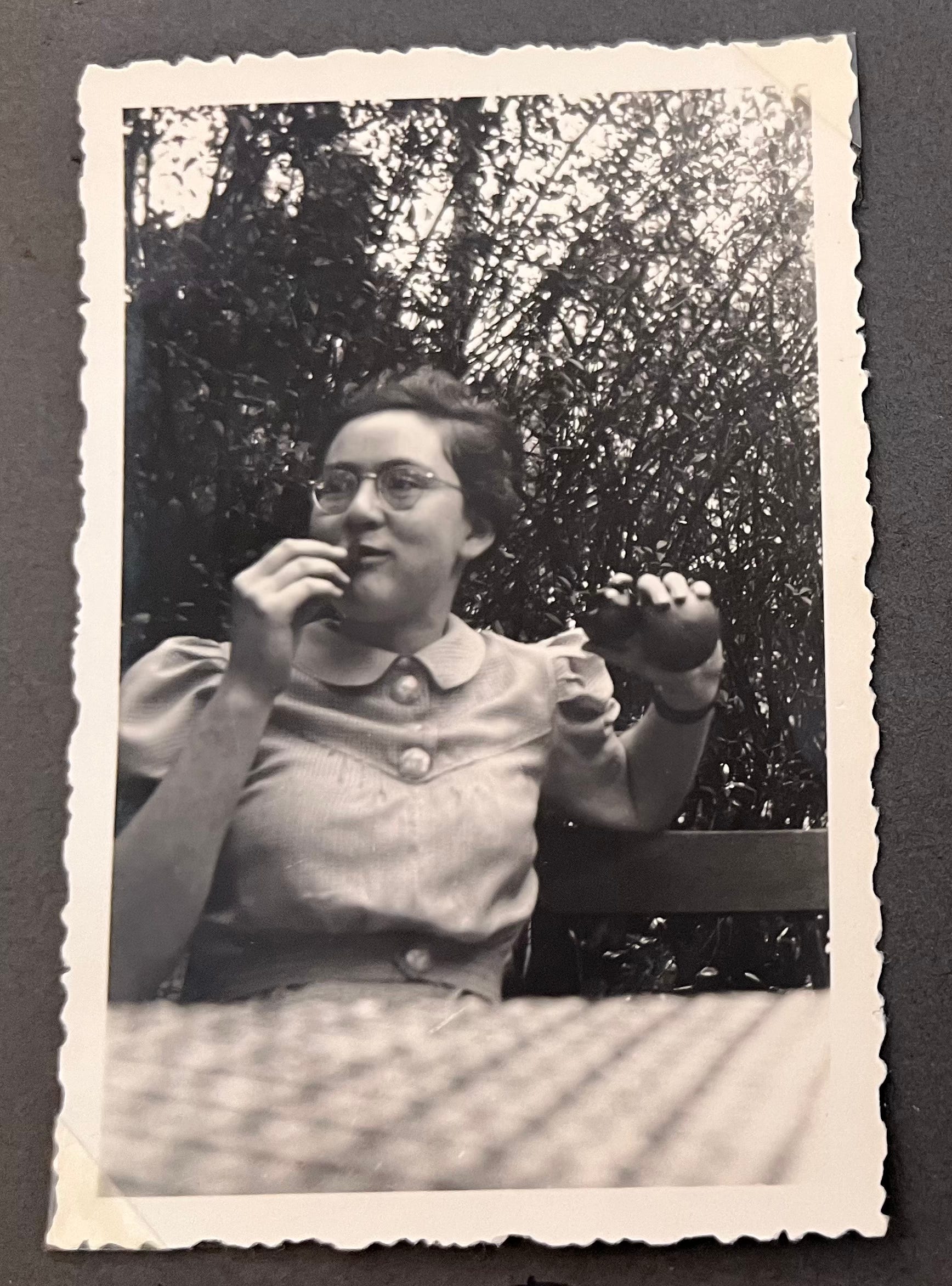
At the age of twelve, I traveled to Ludwigshafen, Germany, to sing in Houston Grand Opera’s 1994 revival of Kurt Weill and Langston Hughes’ Street Scene, which had first appeared on Broadway in 1947. For this production, a dozen children—army brats from the U.S. military base in nearby Heidelberg—were brought in to fill out the sprawling cast of characters who populate the operetta’s grimy Lower East Side setting. But the part of Willie Maurrant, a brawling street kid whose machismo conceals a soft center, required someone with more experience, and I’d sung the role a few years earlier. The catch: I would need a chaperone. In the event, my paternal grandmother, Hannelore, volunteered for the gig.
My grandfather had recently died (it was not an easy marriage), and Lore, as she was known to us, was up for an adventure. We flew into Frankfurt, then took a train to Ludwigshafen, a quaint city whose cobblestoned streets were wreathed with decorative lights. My memories from our month abroad are hazy, but a few images remain indelible: silver platters of rich German food, brought to me by my grandmother while I quarantined in a fusty hotel room with a case of chicken pox (a week of rehearsal lost). On a given night, there would be bratwurst and thick slices of roast beef; potatoes variously scalloped, fried, or smashed; the odd green vegetable; a dish of chocolate pudding. Mornings, Lore would sit in the lobby drinking black coffee while penciling her way through the New York Times crossword puzzle. By the time my quarantine had concluded, the crossword had become a ritual she shared with our kindly conductor, a wild-haired Englishman named James Holmes. But my clearest memory from that time is one of omission. I’m almost certain that my grandmother said nothing to me about the significance of our transatlantic sojourn: she had not set foot in Germany since fleeing the Nazi regime in 1939, aged seventeen.
The Houston Grand Opera production of Street Scene was among the first to be captured in high-definition for DVD release, and though it’s long been out of print, you can find it on YouTube. Scanning the scenes in which I appear—the most substantial is a schoolyard song and dance culminating in a fistfight—I sought recently to decode my twelve-year-old state of mind. On screen, I see a child who vacillates between self-confidence and spaciness—not much has changed in three decades. (I also note that I’m strategically hidden during the dance sequences, and for good reason.) But there’s no indication—how could there be?—of what I might have thought about my grandmother’s homecoming.
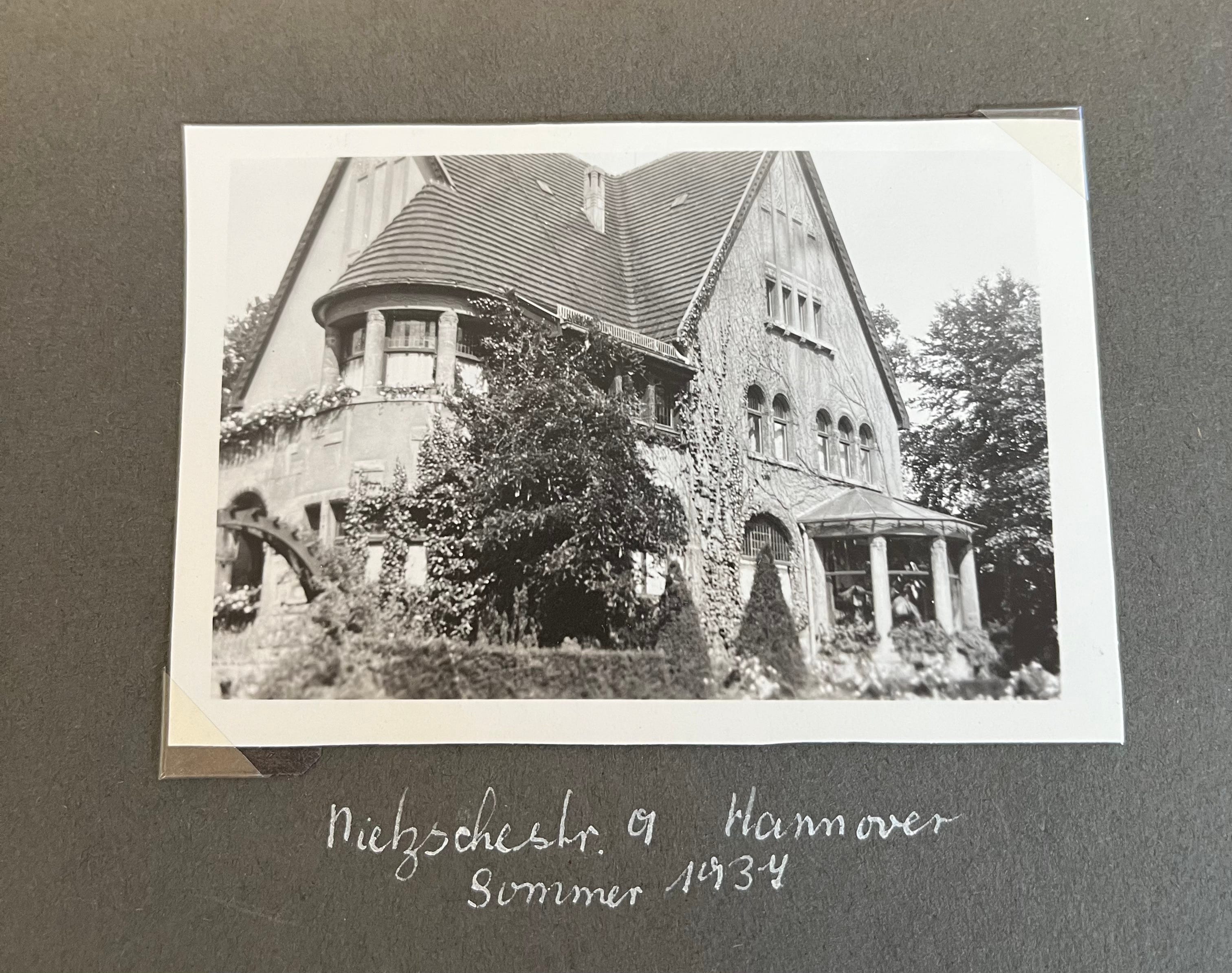
Until Hitler came to power, Lore lived a typical, if not entirely happy, assimilated German-Jewish existence. Her father, Alfred Schaefer, was a prosperous banker whose first wife had died when their two sons were small. With his second wife, Else, there would be two more children, the first of whom was my grandmother. (Else would live to be ninety-nine; I recall her sitting in a worn Eames lounge chair in the living room of my grandparents’ Los Angeles home, a scowl fixed to her wizened face.) Then came the Third Reich, and institutionalized antisemitism along with it. In short order, my great-grandfather would lose his job, Jews were stripped of citizenship, while Jewish businesses became sites of protest and intimidation.
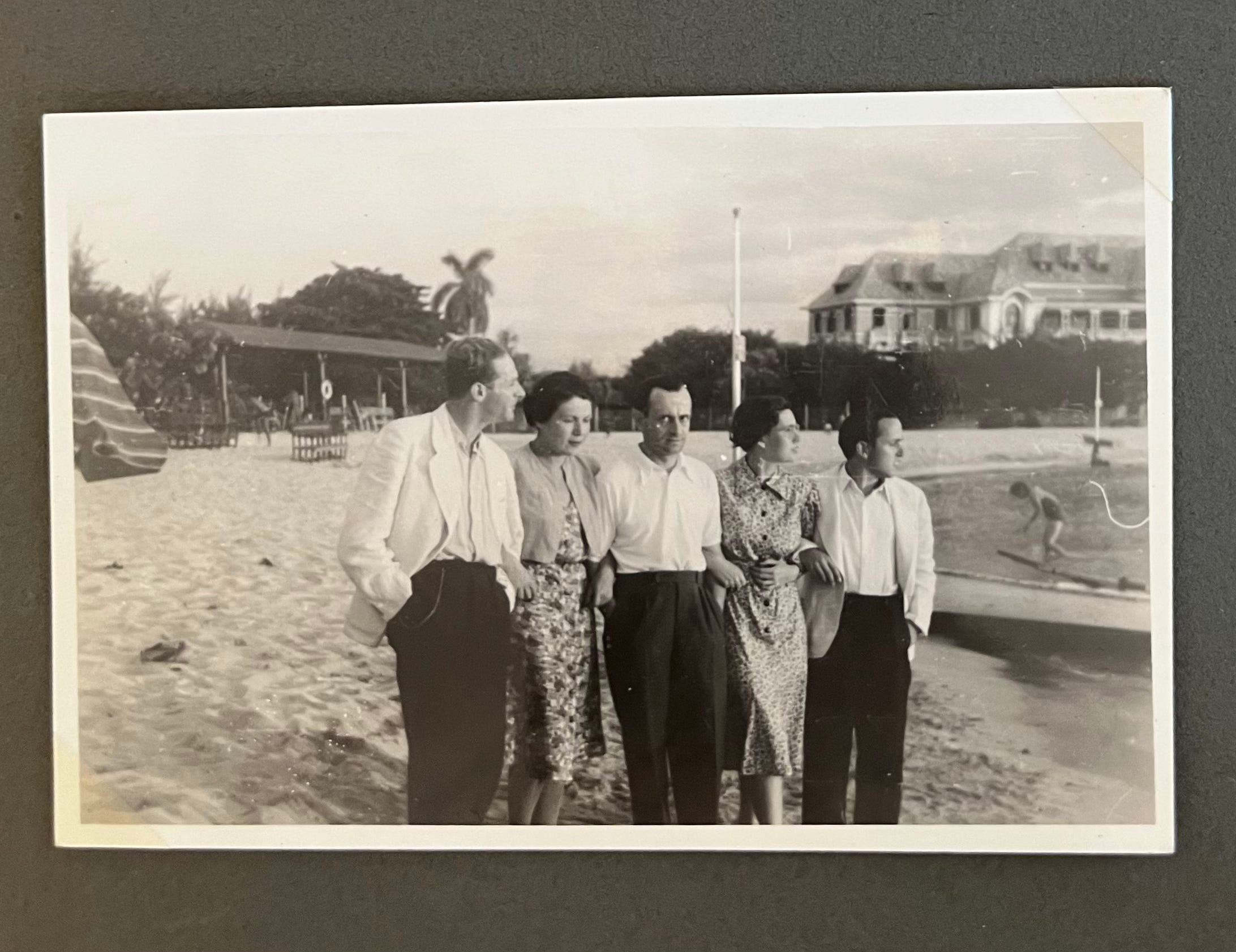
The day after Kristallnacht, my great-grandfather was arrested and sent to Buchenwald concentration camp. There, though malnourished, he managed to stay alive. Some two weeks later, he was released. (“What a sight! From the railroad car emerged a horde of the dirtiest, most ragged, starving human beings,” wrote my grandmother.) In the first months of 1939, the family crossed the Atlantic on the S.S. Orinoco, the last ship to make safe passage before the ill-fated journey of the S.S. Saint Louis. They docked in Havana, where, for six months, Lore and her family lived among an enclave of fellow German-Jewish refugees, before emigrating to the United States via New Orleans.
As a child, I knew little of this history. During our stay in Ludwigshafen, as I have said, my grandmother told me nothing about what she felt upon returning to Germany. She was equally tight-lipped over the telephone with my parents, who recall only her comments about the opera’s progress, my tendency to miss entrances, and my habit of mouthing the words of everyone else’s lines. (She seemed more impressed that I had the opera memorized than disappointed in my lack of professionalism.) Where in today’s society, some seek to transform trauma into social capital, my grandmother seemed to want to forget. And yet, I have come to believe, she very much wanted others to remember.
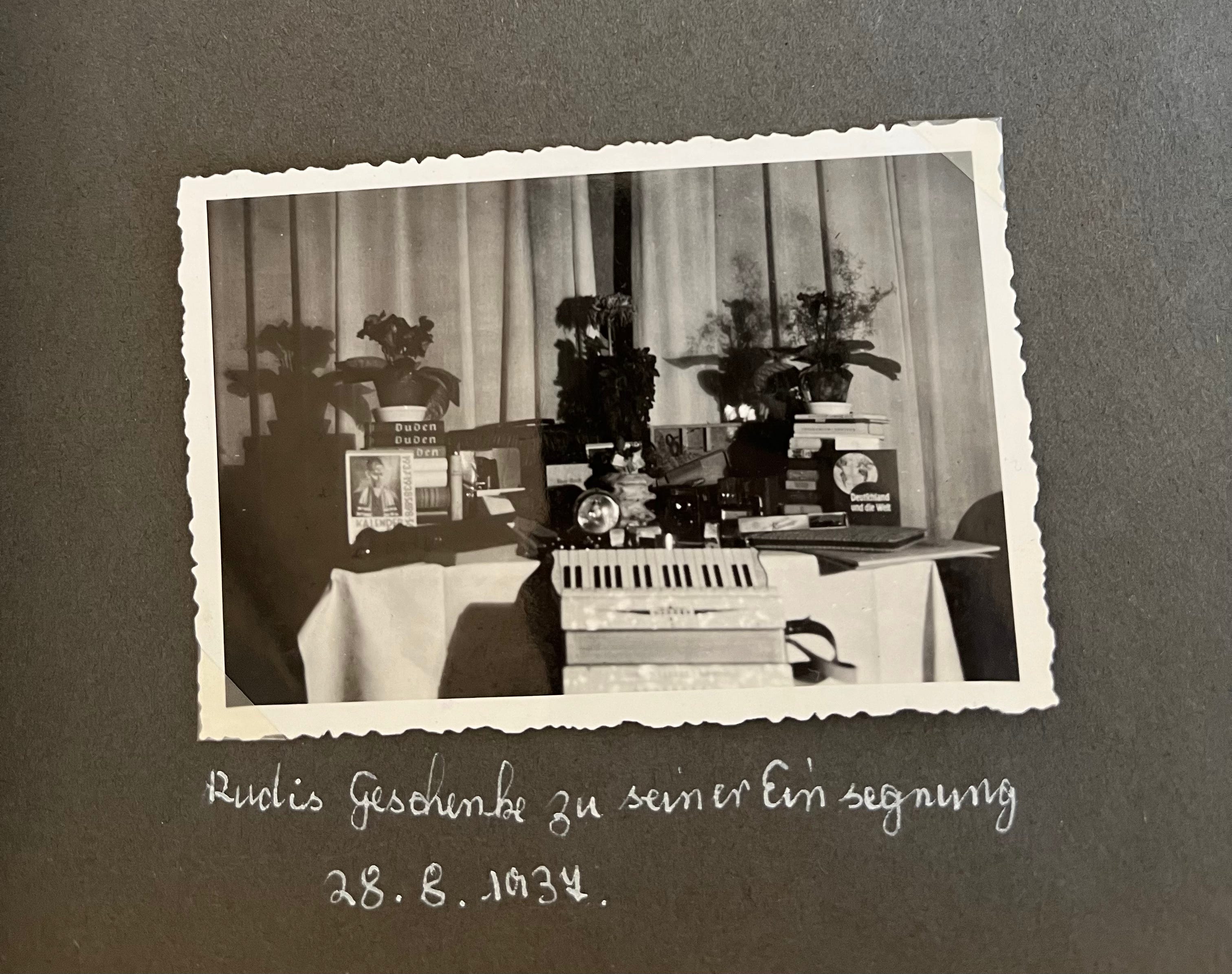
Years later—I was a junior in college—Lore was diagnosed with metastatic breast cancer, and was given a year or two to live. Miraculously, she lived another seven years quite happily, until the cancer spread to her brain in early 2010. The last time I saw her, we sat together in the living room of her apartment in a semi-assisted living facility in Santa Rosa, California, ensconced in a canopy of trees. I remember thinking that the abundant sunlight and greenery were a balm, softening the certainty of death; my grandmother at that point had only weeks to live. Against the wall was an imposing desk strewn with papers. At the center sat a candy-colored iMac on which she’d been translating the diaries she’d kept as a teenager. Sitting with my father and uncle, we looked through old photo albums of pre-war Germany, each picture bearing an inscription in looping, silver script. Before we left, I asked Lore if I could email myself the diaries. “Of course, hon,” she said. I walked to my rental car and wept.
A few months after she died, the composer John Adams invited me to write a piece of music for the Los Angeles Philharmonic. I decided to compose a memorial for my grandmother, and began poring over the diaries. Reading them, I was struck by the space afforded to the quotidian: accounts of sprained ankles, fights with parents, dates with a high school boyfriend (“under the cover of our coats, we talked to each other with our hands”). And yet, the specter of Nazism announces itself regularly, often woven into accounts of the mundane. On December 16th, 1934, my thirteen-year-old grandmother writes:
Yesterday people stood in front of Jewish stores and agitated and yelled. I am so afraid of everything. [In school] we had to write a French paper. I hope that it came off well. Gerd [her brother] sent me some good stamps.
By 1938, the diaries have taken a distinctly dark turn. Most chilling is her account of the S.S. raid on Groß-Breesen, the agricultural training facility where Lore and her younger brother Rudi had been sent to prepare for emigration. She describes the smashing of windows and grand pianos, axes lodged in tabletops, the boys being corralled by stormtroopers into a barn whose doors were then barricaded shut, the fear that the barn would be set ablaze. Mercifully, no one was harmed, and the siblings returned home, only to find that their father had been sent to Buchenwald.
Orinoco Sketches, a brief song cycle relating my grandmother’s flight from Germany, premiered in Los Angeles in May of 2011, its libretto inspired by diary entries dating from her transatlantic voyage. (“Sun and ocean, sun and ocean! Life is beautiful… the foam sprays high over the bowsprit... The ocean looks like a giant snow field.”)
Six years later, I returned to the diaries in Book of Travelers, an album and stage piece chronicling an 8,980-mile railway journey I took in the wake of the 2016 U.S. presidential election. Most of the songs depict passengers I met in Amtrak dining cars, but writing about other people’s intimacies required some vulnerability of my own. Here, then, is “October 1st, 1939/Port of Hamburg,” whose opening lines find my grandmother on a train somewhere in Louisiana:
We are traveling through a flat, beautiful landscape
     writes my grandmother
Ancient forests; trees like bewitched figures, thickets of shrubs
     in 1939,
Farmlands, small wooden houses,
blue lakes, green village ponds.
     her father arrested, then released.
Now and then, cattle.
Earth covered with high grasses.
     fake passports
Enchanting places, where one
would like to stop.
     a steamship from Hamburg to Havana…
Later, the song rewinds to 1938 and shifts perspective—“after school, they chant her name / she runs home, she prays / but caught because her father couldn’t quite believe / what ought to have been plain to see / til broken glass was at their feet, and now they could not wait…”—before barreling forward across the ocean and finally to Southern California:
Lucky one, she got in,
Some papers signed by distant kin.
And every night she wrote
Six postcards sent back home,
And when she read the brief replies,
My grandmother would start to cry;
The careful script, it could not hide
The fear in every one
She read beneath the L.A. sun
Until the letters did not come.
In my work, I have returned to my grandmother’s story as a cautionary tale: to underscore the dangers of fascism and xenophobia, of brittle attitudes toward immigrants. I remember learning just before I went on stage at the Kennedy Center in 2018 that a man had shot to death nine Jews who were praying at the Tree of Life Synagogue in Pittsburgh, and that my wife’s childhood rabbi had been in the building (he emerged unscathed). That night, I sang “October 1st, 1939/Port of Hamburg,” whose final refrain seethes:
History don’t stand a chance
Drowning in the false, fat present tense.
And why would you need
To know anything
That happened any earlier than late last week?
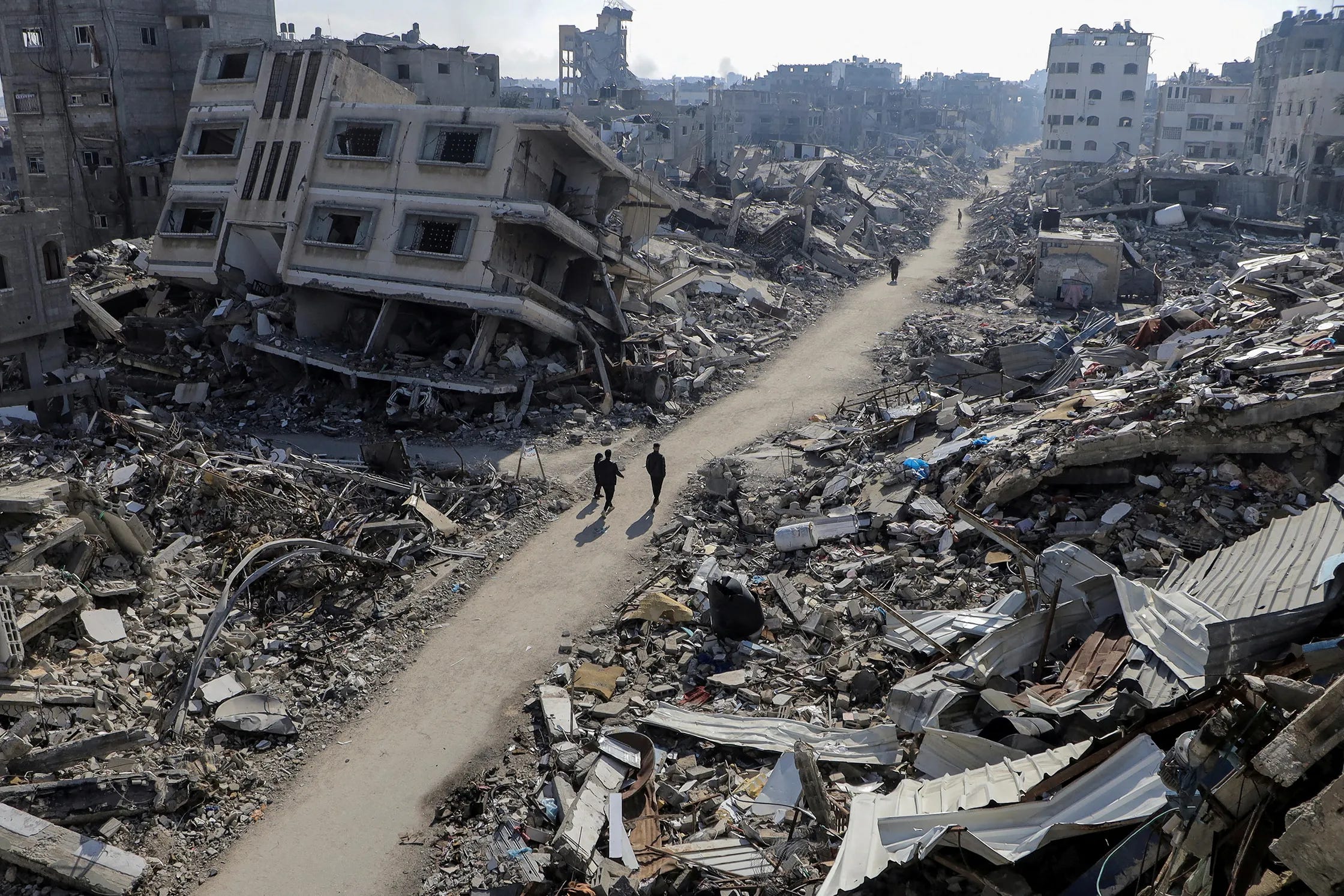
But 2018 is not 2026. And those words, it goes without saying, mean something different now than they did eight years ago. As Pankaj Mishra writes in The World After Gaza, “the memory of the Shoah has been perverted to enable mass murder, while obscuring a larger history of modern Western violence outside the West.” Since Hamas’ massacre of some 1,200 Israelis on October 7, 2023, and the Israeli government’s subsequent campaign of collective punishment against the Palestinian people, I have wondered what purpose these pieces of mine serve.
Our beliefs about the present reflect that which we choose to remember about the past. Nowhere is this more evident than in the contested theater of memory that surrounds the conflict in the Middle East. “The Holocaust will forever remain a black hole in human history. But the moral credit card it gave Israel has expired,” writes Avrum Burg, former Speaker of the Israeli Knesset. Whether the Holocaust ever granted Israel a “moral credit card” is debatable. But as a Jewish artist descended from those who survived the Nazi regime, I fear that bearing witness to the horrors of the past now bleeds uneasily into the cynical commodification of Jewish trauma: humanity’s mid-century nightmare played on a recursive loop in order to justify the extermination of the Palestinian people.
Beyond worrying that these stories might be used to justify a politics of cruelty, dispossession, or worse, I lament the fact that my work has fallen on deaf ears, that “never again” was always conditional rather than universal. But if telling my grandmother’s story has failed to prevent history from repeating itself, perhaps it has succeeded in lifting a single life—hers—out of the frothing cauldron of weaponized narrative, a means of reminding myself, and others, that history oughtn’t be reduced to politically expedient abstractions. “The paramount thing is that the struggle for equality in Palestine/Israel should be directed toward a humane goal, that is, coexistence, and not further suppression and denial,” wrote Edward Said in his preface to the 2003 edition of Orientalism. The same could be said for political life in the U.S., where too often, we seem to forget that our “neighbor-enemy,” to borrow Martin Luther King, Jr.’s term, is made of flesh and blood, and that rather than trying to vanquish him, our goal out to be reconciliation.
Those last two sentences are, by design, something of a Rorschach test. Where you sit, the angle of your gaze, determines whether you perceive a stranger as ally or enemy. What I want to say here is that regardless of the figure you see in the inkblot, we will never humanize one people through the dehumanization of another.
The third, and perhaps final, work for which I’ve drawn from my grandmother’s diaries is Heirloom, a piano concerto written for my father, the pianist and conductor, Jeffrey Kahane. As the title suggests, the work is an inquiry into inheritance, with each movement exploring a different bequest. At its center is “My Grandmother Knew Alban Berg,” in which I wrestle with Lore’s conflicted relationship to German culture in the shadow of its appropriation by the Third Reich. (February 3rd, 1940: “Can one give up [German literature] and say: ‘I am an American, Germany is my enemy. The American culture is greater than the German culture, the German people are primitive?’”)
She answered that question—definitively—in the negative, attending concerts rife with German music for the next seventy years. Her son, Jeffrey, beyond developing a lifelong love of German literature, would become one of the great American interpreters of Bach, Mozart, Beethoven, and Schumann. He, in turn, would pass that love of Germanic music onto me. Lore died a month before I met the woman who would become my wife. Eight years later, our first child was born. Her middle name is Schaefer.
As always, thank you for reading, and to those of you with paid subscriptions, for making this publication possible. If you’re in a position to upgrade, I’d be delighted, but liking and sharing is great, too!
A few updates: in case you missed it, my new album, Elevator Songs, a collaboration with Roomful of Teeth, is out now. NPR calls it “brilliant” and describes it as “The White Lotus meets Everything Everywhere All At Once.” Next week, I’ll be in Charlotte, North Carolina, to perform emergency shelter intake form with my colleagues Alicia Hall Moran, Holland Andrews, and Holcombe Waller, alongside the Charlotte Symphony and conductor Kwamé Ryan. On July 10th, I turn 45, and decided that what I wanted most for my birthday was to play a concert here in Portland. Later that month, I’ll reunite with my dear pal, Pekka Kuusisto, for a pair of shows in Canada, before heading to London for the BBC Proms, which on August 17th is presenting my clarinet concerto, If love will not swing wide the gates, with soloist Anthony McGill. Finally, stay tuned for news about a European tour of Elevator Songs. Tickets and more information about all of the above can be found here.
Thank you for writing this (and for your amazing work in general), Gabriel. I found it deeply moving - our grandparents share a similar story.
I completely share the frustration with Jewish trauma being weaponised to justify cruelty or dehumanisation. That has to be challenged. But I also feel increasingly uneasy about the danger of Jewish trauma itself becoming treated as suspect, as if every Jewish family story, every memory of persecution, every expression of Jewish fear now has to be processed through Israel/Palestine before it is allowed to simply exist.
I of course understand the need for that at the moment, but wonder if it might be part of the alienation many Jews around the world are feeling right now. The horror in Gaza is real. So is the way Jewish grief, memory and vulnerability are increasingly met with suspicion, exhaustion or silence.
I guess I’m trying to hold multiple things at once these days and have tried to get my thoughts down around some of these issues and rising antisemitism in the UK.
https://admundo1.substack.com/p/thoughts-on-antisemitism?r=hckk2&utm_medium=ios&fbclid=IwdGRjcARtIIpleHRuA2FlbQIxMQBzcnRjBmFwcF9pZAo2NjI4NTY4Mzc5AAEeyXxv1Vb01H3pc3J6EG6_-ck14PI3mUagGv27qwSwVDVV58obncm6IH7Do2Q_aem_YtxZoW15aZx5fqKs315bTQ&utm_id=97757_v0_s00_e232_tv2_tp1_a1dennhb6gbp3q&triedRedirect=true
Thanks again for all you so thoughtfully and brilliantly contribute. Certainly not falling on deaf ears here.
Thank you for beautifully examining this journey to Ludwigshafen you shared with your grandmother. It perfectly illuminates the incongruities and contradictions that at least some of us of German-Jewish heritage experience in our response to the latest phase of the conflict in the Middle East and to the corresponding rise of anti-semitism. The tight lipped response of our nazi era grandparents and parents to their childhoods and young adulthoods is more understandable now. You have provided an uneasy but forward looking alternative to it.